
DIY Chicken & Beef Stock Concentrate – No More Bouillon Cubes
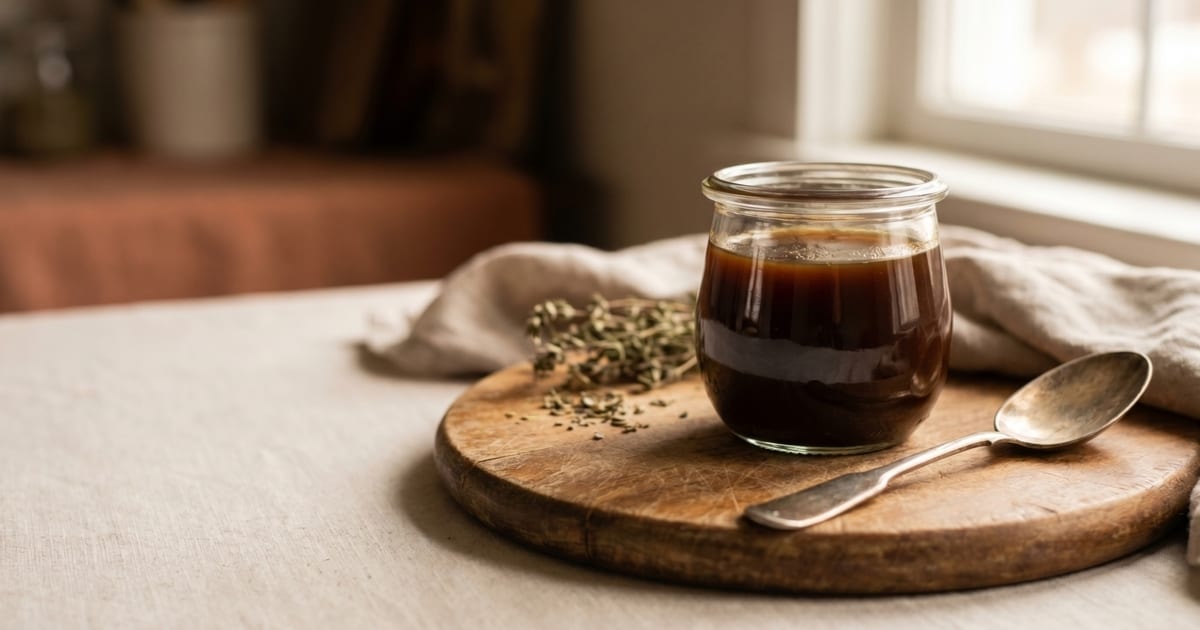
Store-bought bouillon cubes and powders are packed with yeast extract, MSG, and mystery flavors. This stock concentrate gives you real, homemade broth flavor in a fraction of the freezer space.
I have been making my own vegetable stock paste for years, and it has completely replaced store-bought bouillon in our house. But whenever a recipe called for chicken or beef stock, I was back to square one: either buy the cubes (and read the long ingredient list with a sigh) or cook a huge pot of broth and freeze it in containers that took up half the freezer.
Freezing broth in portions sounds smart until you realize you are storing mostly water. Ice cube trays help a little, but they are messy to balance on the way to the freezer, and the portions are never quite right.
Then I came across the idea of reducing stock down to a concentrate – so thick and salty that you use it just like a bouillon cube, but with nothing but real ingredients. It changed everything.
Why concentrate instead of freezing broth?
- Spoonable – because of the salt content, it stays scoopable even frozen
- Flexible portions – use a teaspoon or a tablespoon, whatever the recipe needs
- No additives – just bones, water, salt, and time
How gelatin affects the texture
Depending on how gelatin-rich your broth is after simmering, you have two options for storing the concentrate.
High-gelatin batch: The concentrate will set firm in the fridge. You can pour it into a shallow dish, chill until solid, cut into cubes, freeze the dish for an hour or two, then pop the cubes into a freezer bag.
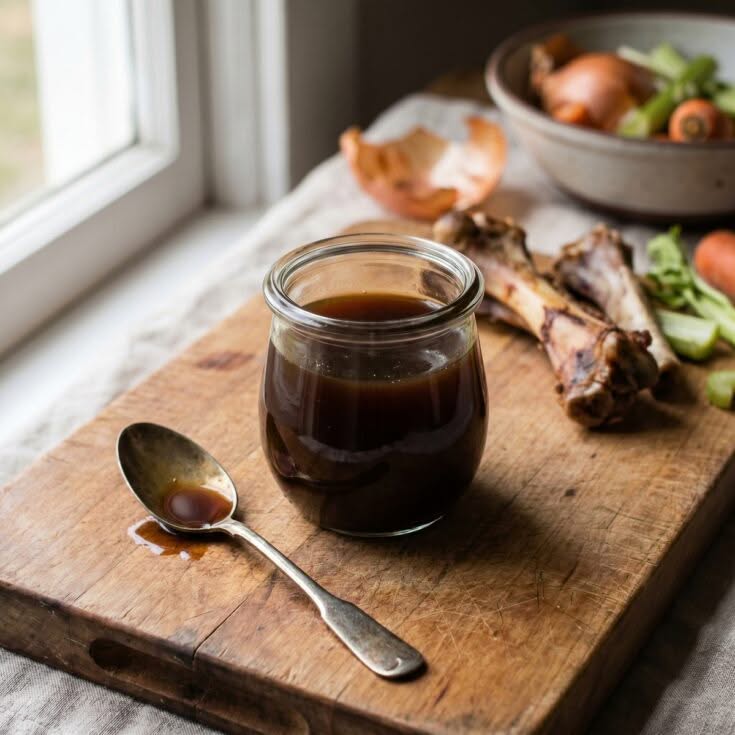
Lower-gelatin batch: It will stay semi-soft, almost like a thick paste. That is actually more convenient – just spoon it straight from the jar. If you really want cubes, stir 1-2 teaspoons of gelatin into the warm concentrate before chilling.
I personally prefer the semi-soft version. It is one less step, and I can scrape out exactly what I need.
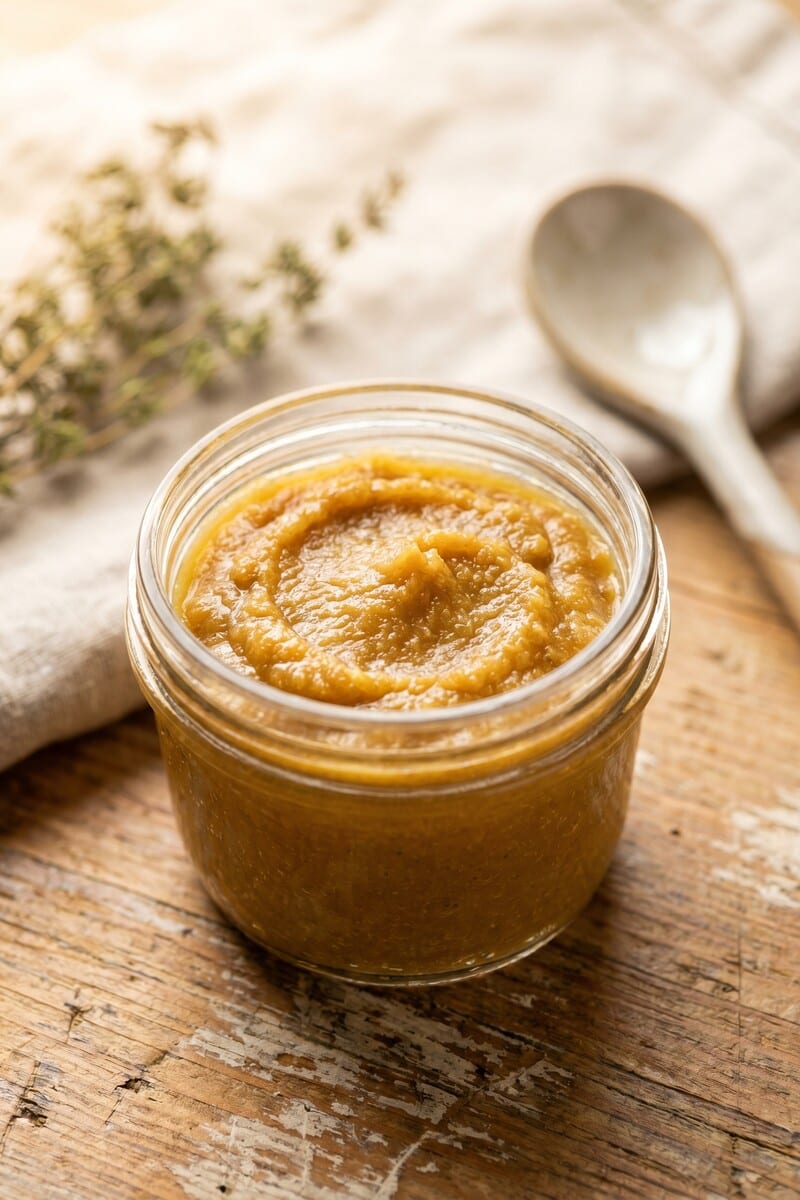
Method overview
- Strain and reduce the broth until only a thin layer remains
- Cool, transfer to a small freezer-safe jar, and freeze
- Stir the separated fat back in (by hand or with an immersion blender) for a smooth texture
The hands-on time is minimal. Most of the work is passive simmering and reducing.
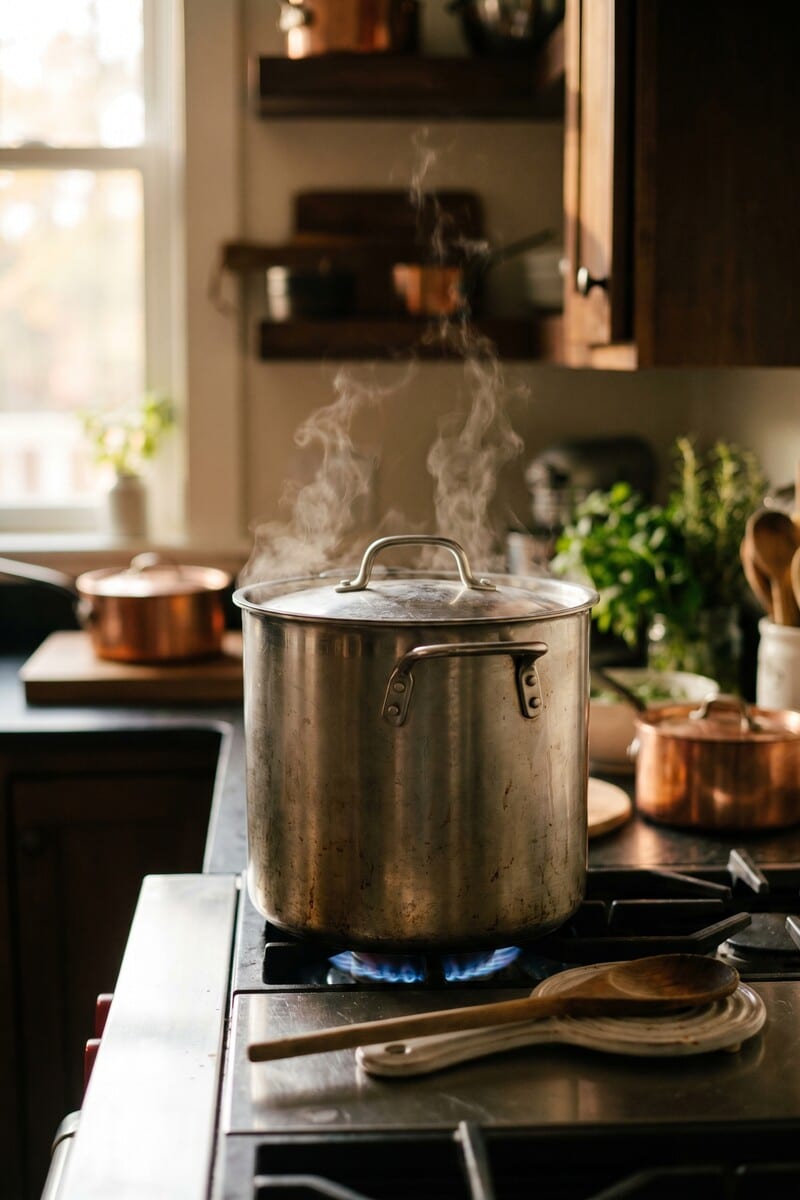
Pressure cooker or slow cooker option
This is where it gets really easy. If you have a pressure cooker (Instant Pot) or a slow cooker, the broth practically makes itself.
Slow cooker: Toss everything in, set to LOW for 8-12 hours (or HIGH for 4-8), then strain and reduce on the stovetop.
Pressure cooker: Cook on high pressure for 2 hours. If you place the bones in a metal steamer basket, you can lift them out in seconds and switch to sauté mode for reducing.
Use your scraps
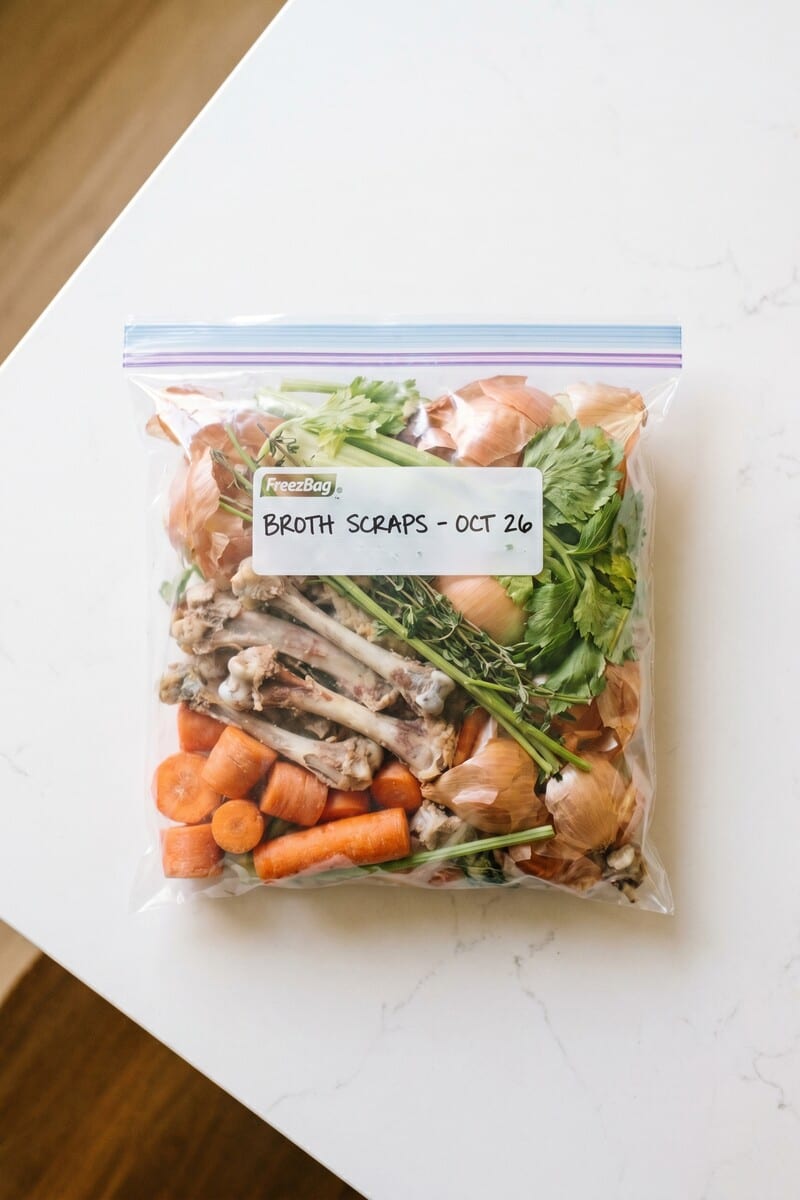
This recipe is perfect for using up leftover bones and skin from a roast chicken. Collect them in a freezer bag until you have enough for a batch. The same goes for beef bones after a pot roast or short ribs dinner.
DIY Chicken & Beef Stock Concentrate
Ingredients
- 1 whole stewing hen or 2-3 lbs (1-1.5 kg) chicken bones, backs, and necks
- 1 heaped tablespoon kosher salt
- 2 tablespoons (30 ml) apple cider vinegar
- 3-4 quarts (3-4 liters) water
- Optional: 1 tablespoon pasture-raised gelatin powder
- For beef stock, substitute 2-3 lbs beef bones (mix of marrow and joint bones) and follow the same method.
Instructions
- Place bones, salt, vinegar, and water in a large stockpot. Bring to a boil, then reduce heat and simmer partially covered for about 3 hours.
- Remove the bones. Strain the broth through a fine-mesh sieve and return the liquid to the pot.
- Simmer uncovered on low heat for 3-4 hours, until only about 1/2 to 1 cup of thick, dark concentrate remains. Keep an eye on it toward the end so it does not scorch.
- Let cool slightly, then transfer to a small freezer-safe jar or container.
- Choose your storage method:
Option A (paste): Let cool completely, stir the settled fat back in, and freeze. The concentrate will stay spoonable.Option B (cubes): Stir 1-2 teaspoons of gelatin into the warm concentrate. Pour into a shallow dish, chill until firm, cut into cubes, freeze the dish for 1-2 hours, then transfer cubes to a freezer bag.
Slow cooker method
Place all ingredients in the slow cooker. Cover and cook on LOW for 8-12 hours (or HIGH for 4-8 hours). Remove bones, strain broth into a pot, and reduce on the stovetop as described above.
Pressure cooker method
Place bones in a metal steamer basket inside the pressure cooker. Add remaining ingredients. Cook on high pressure for 2 hours. Quick-release or natural release - both work. Lift out the basket, switch to sauté mode, and reduce the broth until thick.
Notes
Nutrition Information:
Yield:
10Serving Size:
1Amount Per Serving: Calories: 20Total Fat: 1gSaturated Fat: 0gUnsaturated Fat: 1gCholesterol: 8mgSodium: 65mgCarbohydrates: 0gSugar: 0gProtein: 2g
Nutritional values are automatically calculated from ingredients and may not be accurate. They are only meant to give a rough indication and should never be used to make decisions if you have dietary restrictions or medical conditions that require any of these values to be accurate, so use them at your own risk or do your own calculations.
Have you tried making your own stock concentrate? Let me know in the comments how it worked – and whether you went the paste or the cube route.
Leave a Reply