
Why I Finally Switched to a Smart Home (And How It Saved My Sanity)
We’ve all had those moments. You’re halfway to your destination – or worse, three days into a relaxing vacation – when a tiny, persistent thought starts gnawing at the back of your mind.
“Did I leave the heater on in the office?”
For me, that “moment” lasted a full week. While I was trying to enjoy some much-needed downtime, my office heater was happily chugging away at full blast, warming an empty room and essentially burning money for no reason.
That was the turning point. Not because I wanted a house full of gadgets, but because I realized that my home should be working for me, not creating more “invisible waste”, both in terms of energy and mental brain space.
The “Simple Balance” Approach to Tech
If you’ve been following this blog for a while, you know we’re all about finding more time to enjoy life naturally. So, you might be surprised to see “Smart Home” appearing as a new category here.
Isn’t technology supposed to be the opposite of simple?
It certainly can be. If you’re spending your weekends debugging code or fighting with a voice assistant that won’t turn off the kitchen lights, that’s not balance. That’s a second job.
But after experimenting with HomeAssistant, I’ve discovered a different path.
The biggest challenge with most smart “platforms” is that they want to lock you into their specific ecosystem. But as my home evolved, I found myself with a sprawl of devices from different vendors, each with its own app and its own way of doing things. I didn’t want a “Philips Hue Home” or an “IKEA Home” – I wanted my home.
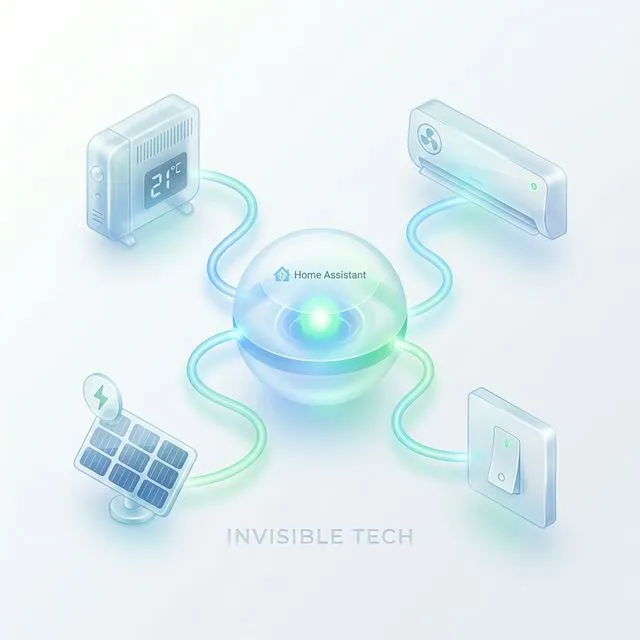
HomeAssistant became the central brain that could finally talk to everything. It allowed me to bridge the gap between simple sensors and complex systems like our photovoltaic inverter and battery storage, or even our new AC and heatpump. Instead of fighting with five different proprietary apps to get things to work intelligently, everything finally speaks the same language.
Taming the Complexity
Now, I’ll be honest: HomeAssistant has a reputation. In the smart home world, there’s often a direct trade-off between user-friendliness and configurability.
On one side, you have closed platforms that are incredibly easy to set up but strictly limit what you can actually do. On the other side is HomeAssistant, which offers maximum configurability but can quickly become overwhelming if you’re not careful.
HomeAssistant has a tendency to lean toward that complexity, but it doesn’t have to be that way. My goal with this new category is to share the tools and tips I’ve used to reduce that complexity, so you can have a “pro” setup without needing to spend every evening in front of a terminal.
I like to call it Invisible Tech. It’s the kind of technology that solves a problem and then gets out of the way.
Reclaiming Your Brain Space
The real magic isn’t in being able to turn on your lights with your phone (honestly, walking to the switch is usually faster). The magic is in the things you don’t have to think about anymore.
- The “Goodbye House” Button: No more walking room-to-room to check switches. One tap (or one automated trigger when the last person leaves) ensures the lights are off, the iron is unplugged, and the heating is dialed back.
- Presence, Not Just Motion: We’ve all been in a “smart” bathroom where the lights go out because we didn’t move enough while on the toilet. True smart tech uses presence sensors that know you’re there, even if you’re just sitting quietly reading.
- The End of “Invisible Waste”: No more heaters running in empty offices. No more kitchen lights left on all night because someone forgot.
What to Expect in This New Category
In the coming weeks, I’ll be sharing the specific tools and hardware I use with HomeAssistant. But I promise you this: we’re keeping it simple (for now :)).
We’ll talk about hardware that you can install and forget, automations that actually reduce the friction in your family’s morning routine, and how to use tech to help your home feel more “natural”, not less.
Because at the end of the day, the smartest part of a smart home is the person living in it. And that person deserves a little more peace of mind.
Are you curious about smart home tech but worried about the complexity? I’d love to hear your biggest “invisible waste” stories in the comments!
Leave a Reply